Publications
Publications In-Progress
-
 Wait for it! Please stay tuned, they are coming soon!!! 😃Aparajita Bose , and et al.
Using science to make the world a better place, one paper at a time.

Published Publications
2026
-
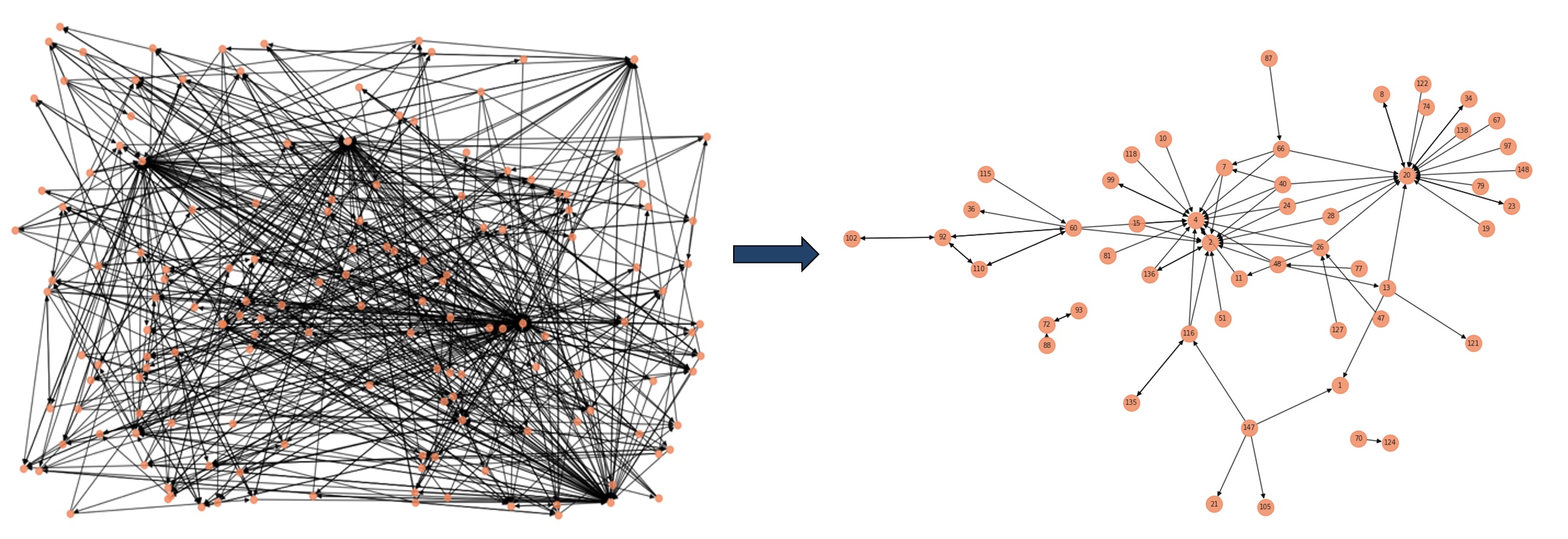 Role-Aware Backbone Extraction and Visualization of Financial Transaction Networks via Asymmetric Non-negative Matrix FactorizationAparajita Bose , Byunghoon Kim, Seungbeom Kim, and 1 more authorHawaii International Conference on System Sciences (HICSS), 2026
This paper proposes a novel backbone extraction framework tailored for financial transaction networks (FTNs), which are inherently directed, weighted, and often dense. Traditional backbone extraction methods typically assume undirected or symmetric structures and struggle to capture the role-specific, directional nature of financial data. To address this issue, we introduce an Asymmetric Non-negative Matrix Factorization (Asymmetric NMF) technique that decomposes FTNs into low-rank representations, preserving directional features while simplifying network complexity. This method effectively isolates the most significant inter-firm financial relationships and identifies influential firms from both buyer and seller perspectives. The model is validated using real-world industrial financial transaction data, demonstrating its superiority over existing backbone extraction methods in interpretability and structural fidelity.

2025
-
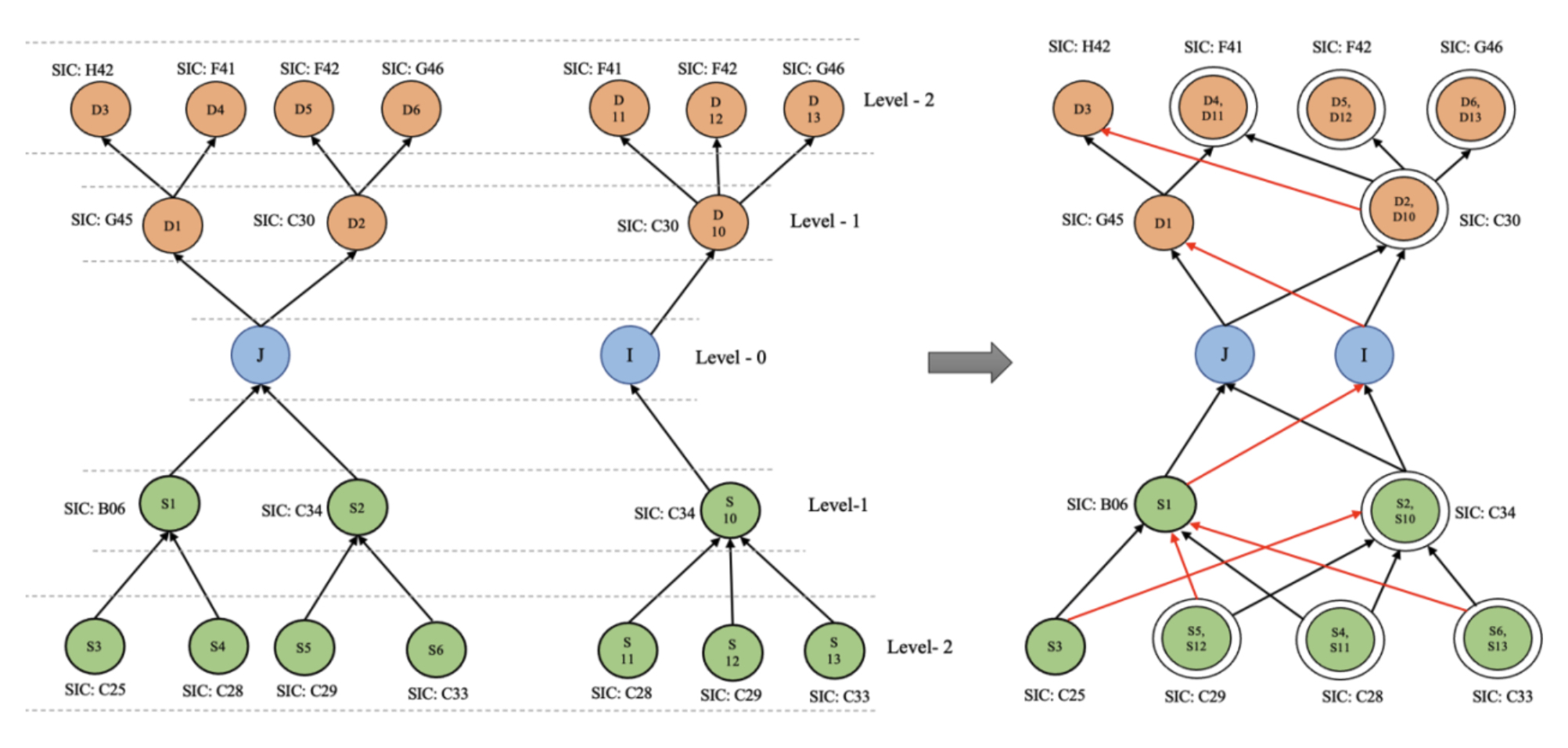 A Novel Similarity Score for Link Prediction Approach Using Financial Transaction Networks and Firms’ AttributeAparajita Bose , and Byunghoon KimIEEE Access, 2025
Financial transaction networks represent inter-firm relationships, where firms and transactions act as nodes and edges, respectively. Link prediction in these networks aims to identify potential future or missing transactions or links, providing valuable insights for decision-making and market analysis. While several link prediction studies exist for general networks, limited research has specifically addressed the unique characteristics of financial transaction networks. Existing studies often overlook important features such as the direction of transactions between firms, the hierarchical nature of transaction networks, and the significance of node attributes, thereby hindering accurate link prediction. In this study, we propose a novel similarity score, the “Attribute-Transaction Similarity (ATS) Score,” for link prediction in financial transaction networks. The ATS Score integrates both transaction network topology and firm attributes, such as the Standard Industrial Classification (SIC) codes, to predict unobserved links between firms. Our method not only forecasts future transactions but also preserves the hierarchical structure of transaction networks. By leveraging both network topology and firm attribute frequencies, our method results in more accurate and reliable predictions. Experimental evaluations on real-world financial transaction network datasets demonstrate that the ATS Score-based link prediction method outperforms existing similarity-based link prediction techniques, achieving superior results in terms of the area under the receiver operating characteristic curve (AUC). This highlights the effectiveness of the ATS Score in capturing the intricate relationships and dynamics of financial transaction networks. The code is available here: https://github.com/aparajita-bose/LP-AttrTran-Sim-Score
-
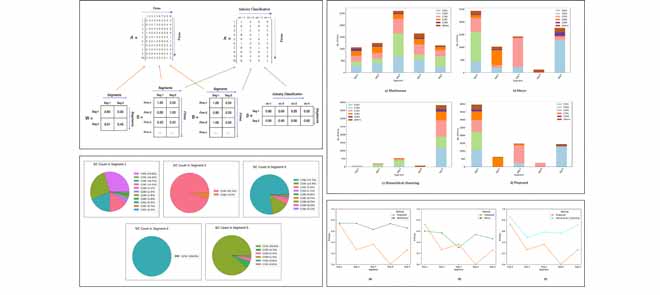 Graph-Based Approach for Industrial Market Segmentation Using Financial Transaction Network Structure and Firm’s AttributeAparajita Bose , and Byunghoon KimIEEE Access, 2025
Market segmentation is a challenging and necessary task for improving marketing strategies and allocating resources effectively in a complex scenario of industrial or business-to-business (B2B) markets. Most of the traditional methods have not provided comprehensive and detailed guidelines for processing massive, complex, and complicated data from financial transactions in industrial markets. Furthermore, they often overlook the overlapping nature of segments, where a firm might belong to multiple market segments. Financial transaction networks (FTNs) can be depicted as graphs, where nodes and edges represent firms and transactions, respectively. A limited number of network analysis studies have been employed for industrial market analysis, but those efforts failed to capture the important features of financial transactions, such as the number of transactions, transaction volume, direction of transactions, and firm-specific attributes. In this study, we propose a novel method for industrial market segmentation that utilizes both financial multiple transactions and an attribute of firms. By integrating a graph-based generative probabilistic model, we reveal and understand the complex and overlapping relationships within financial transaction data. Subsequently, we apply the proposed method to a real-world dataset. The results show that the proposed method outperforms established methods in network analysis, such as clustering and community detection in transactional industrial market (B2B) networks.


2023
-
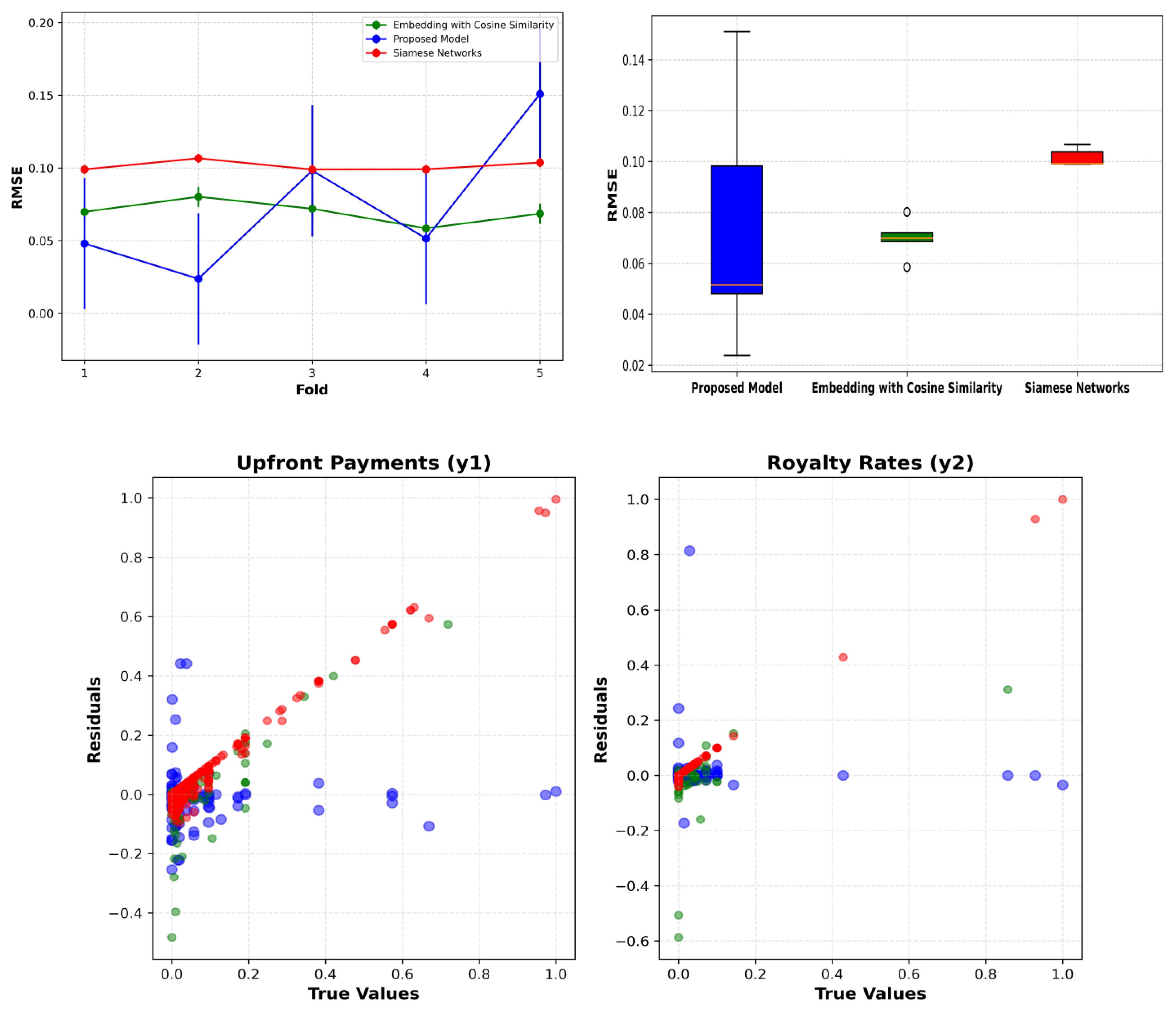 A Novel Methodology for Estimating Technology Value and Importance of Factors in Market-Based ApproachJuho Yoon, Aparajita Bose , Hun Park, and 2 more authorsSystems, 2023
Technology valuation methods are classified into income-based, cost-based, and market-based approaches depending on the perspective of valuing technology. The market approach evaluates the value of technology by referring to cases in which similar technologies have been traded before. In this study, we use prior technology transaction data to estimate the technology value based on the market approach and to identify influential factors to the estimated value. To this end, we adopt a multivariate k-nearest neighbor (MKNN) regression model to accommodate mixed-type input variables aiming at estimating multivariate technology values, selecting influencing factors, and the relative importance of the selected factors. In addition, we can optimize the number of transaction cases k in k-NN regression. Our proposed regression model outperforms an embedding model with cosine similarity in predicting multivariate response variables. In addition, we illustrate how to select and assess the influential factors based on the real-life dataset.
